February 3, 2026
A Flair Up: Chintz Reappears
A look at the return of chintz, from its historic roots to its renewed popularity in interiors, with tips on using vintage floral prints in a fresh and considered way.

Searching for something in particular? Browse our best sellers!
A look at the return of chintz, from its historic roots to its renewed popularity in interiors, with tips on using vintage floral prints in a fresh and considered way.
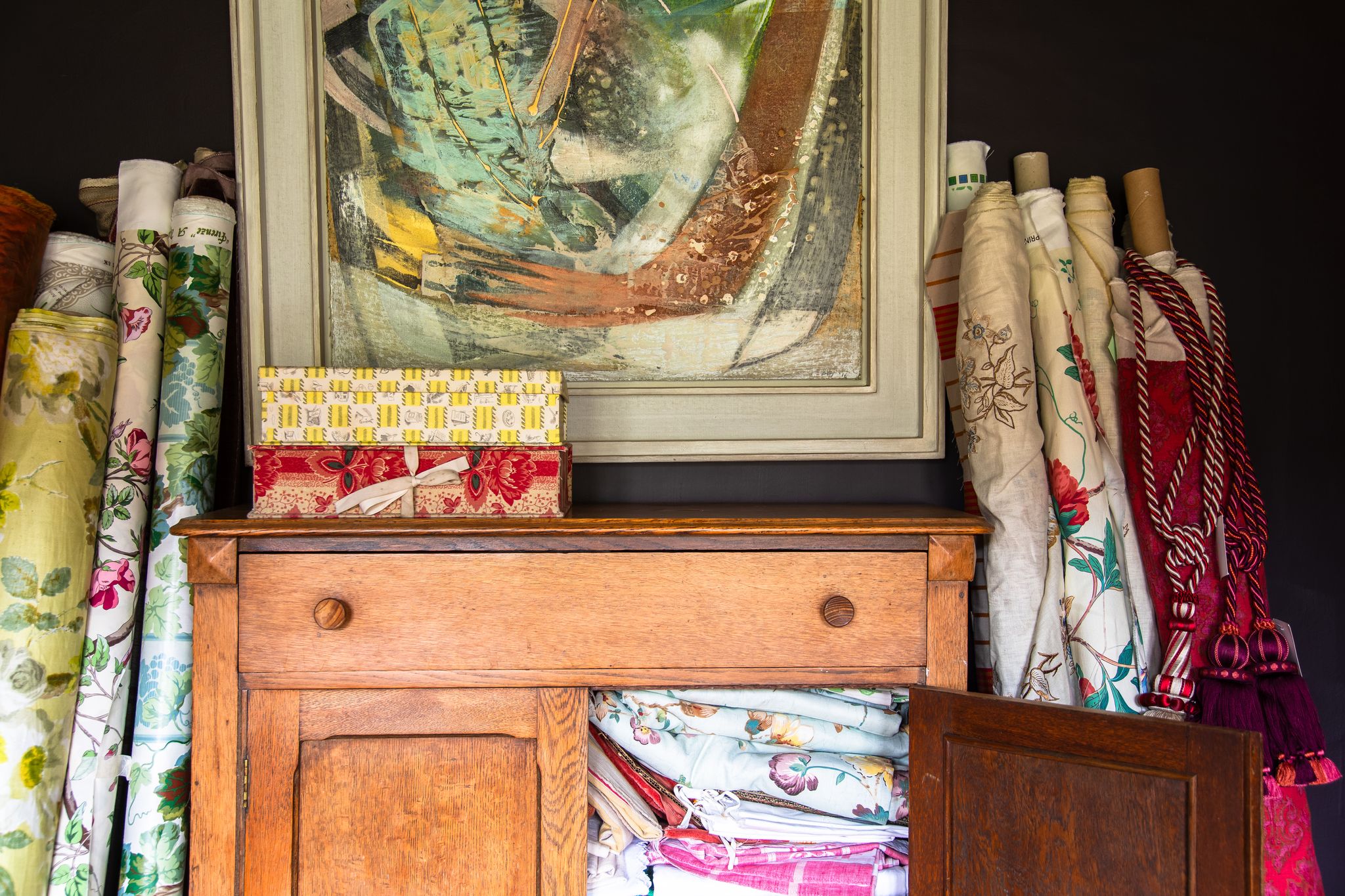
Chintz has been around since the 17th century, when Europeans became obsessed with Indian cotton prints and started producing their own glazed, printed fabrics. By the 18th and 19th centuries, it was everywhere - on walls, beds, windows, chairs. It had a major moment in the 1980s and 90s, before it receded as rooms became pared back and minimal.
But it's one of those styles that never completely disappeared, and right now it's undeniably back. The latest House & Garden made this clear - umbrellas, coats, handbags, headscarves, all in the classic patterns like Colefax's Bowood and Fuchsia, Lee Jofa's Hollyhock. Even the chintz pieces we've posted on Jackson Lyme have been among the most engaged-with things we've shared.
The trick with chintz is avoiding the full period recreation. It's a dated look by nature - that's part of its charm - but it can feel contemporary if you're intentional about how you use it.
Even with vintage chintz, you can make it work by not drowning a room in it. One piece - a gathered sink skirt, a scalloped headboard, a pair of curtains - can be enough.
A lot of vintage chintz sits on yellowish, creamy, or beige backgrounds, and those immediately feel older. If you want it to feel more contemporary, look for chintz on whiter, crisper grounds. That shift alone changes how it reads in a space.
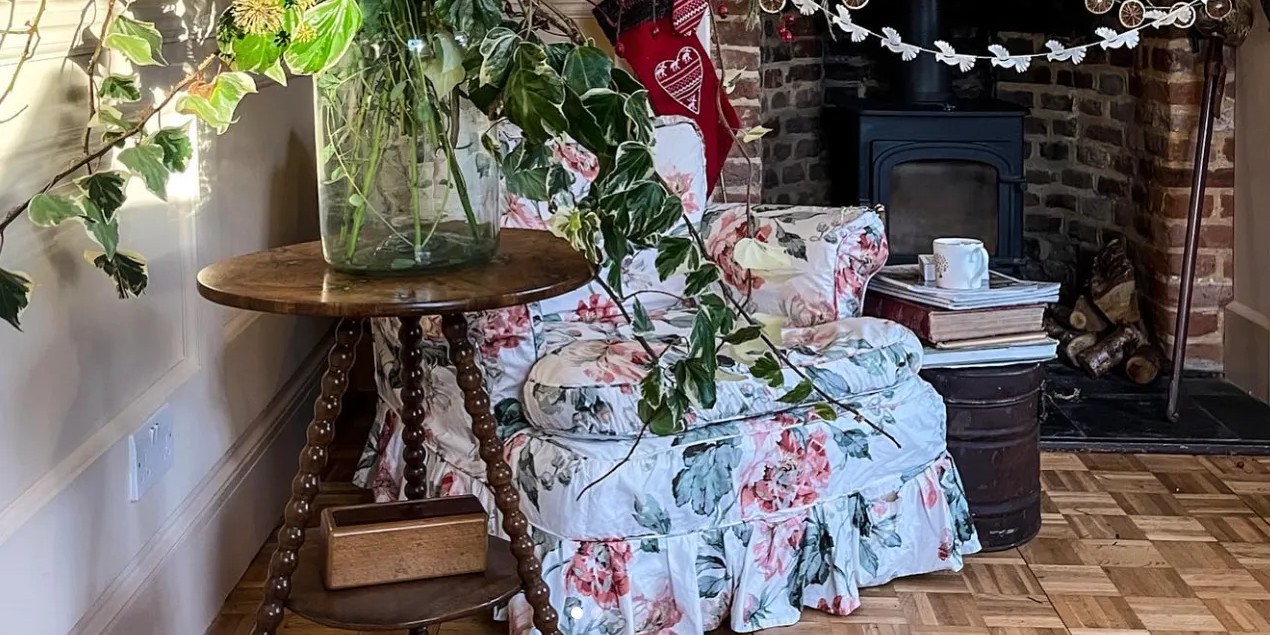
Chintz needs contrast to work. Pair it with something simple: a plain stripe or rush matting. If everything in the room is floral and fussy, it reads as costume. But chintz on one chair in a room of plainer furniture feels deliberate and interesting.